THE STORE
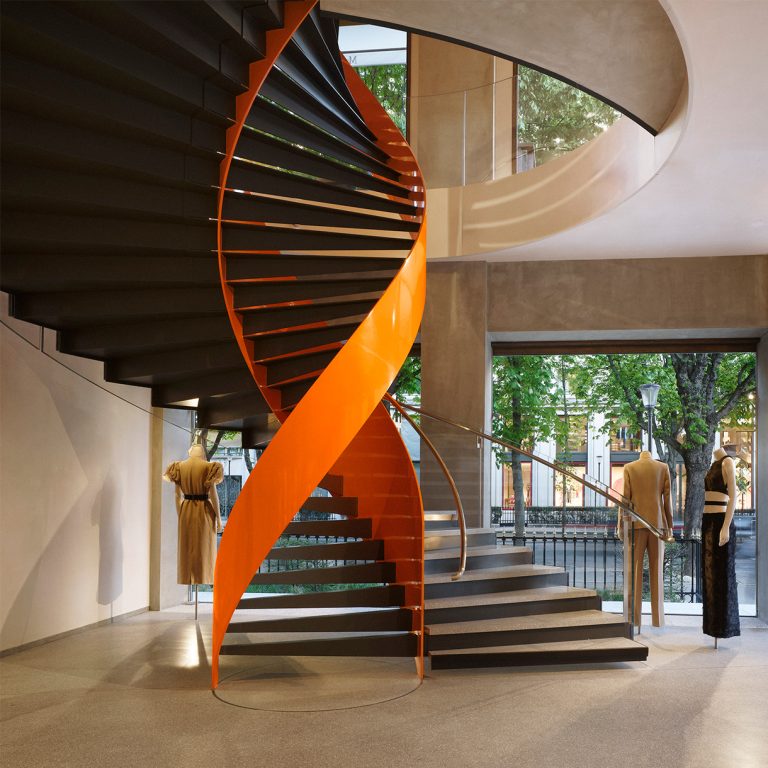
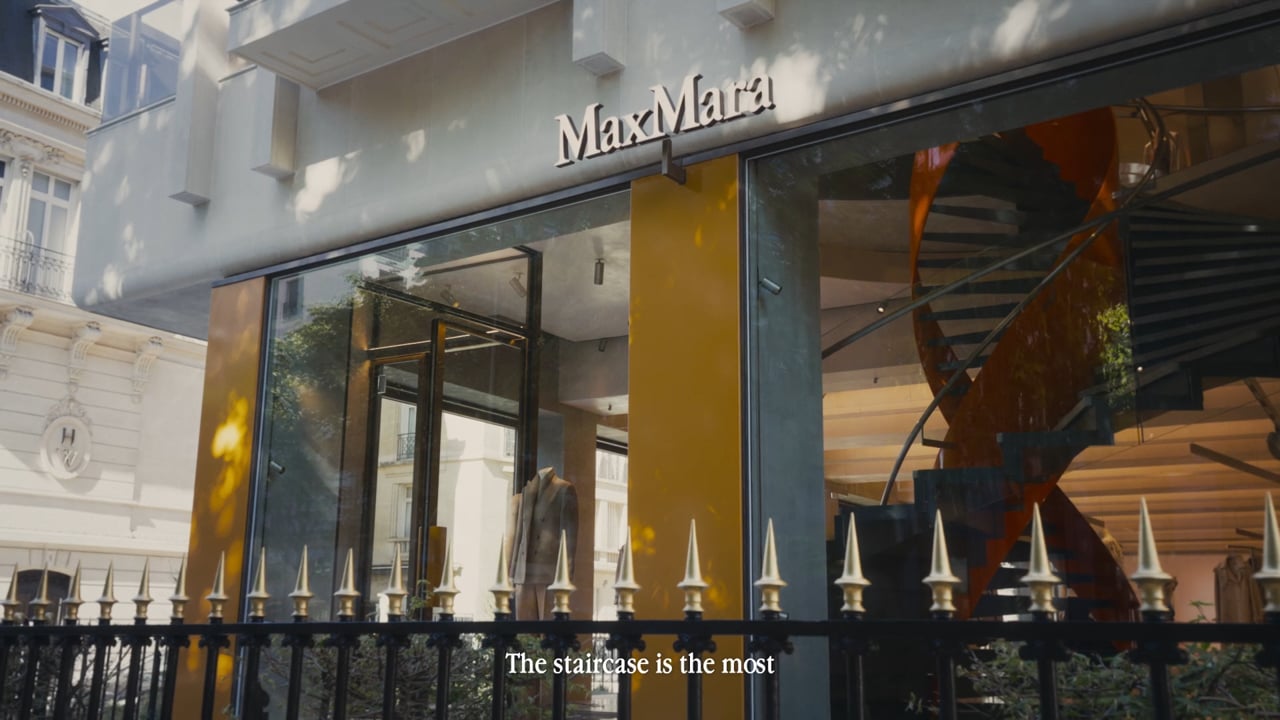
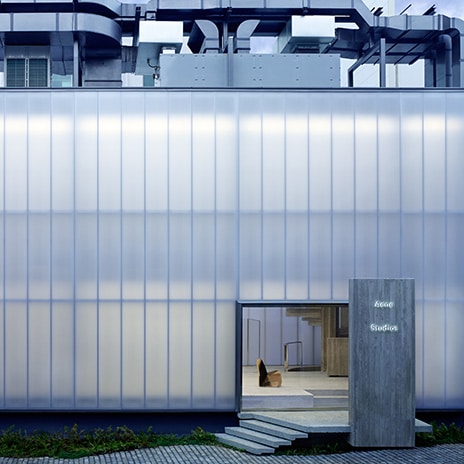
For us, the epitome of MaxMara is a classic, camel overcoat. So this store is a play on camel… a camel enamel shopfront…camel tinted glass….and if you exaggerate camel, what does it become? Orange of course…. The stair up to the first floor is like a double twist of orange peel.
The staircase is the most eye-catching feature of the store and it is intended to grab attention. It is poised as if standing on tip-toe (en pointe) and its steps float, supported centrally by an orange double-helix and grey steel arrows that pierce and connect the twists, forming a back-span support.
In contrast to this attention-seeking stair, the store shows the power of restraint. This restraint is made possible by the elegant and powerful concrete structure of the 1970’s building in which the store is located. Enormous efforts were made to reveal the simplicity of the building and to open up the spaces. The concrete structure that is exposed in the store reveals the essential character of the building. We have added to the concrete language by attaching floating concrete tables, which MaxMara will use to display sunglasses.
The architecture is subtle, elegant, spaces are open and free, views are clear, architectural details are meticulous and precise, the overall effect will be calm and welcoming.
Airyness and clear views from the street reflect MaxMara’s characteristic integrity and openness. With this in mind, I have moved shopwindow displays to the centre of the store where customers will wander amongst a versatile crowd of mannequins.
MaxMara is international, but its roots are in Reggio Emilia, Italy, where it manufactures its famous coats. In order to infuse the store with the spirit of Italy we have used traditional Italian materials, and detailed them in special ways:
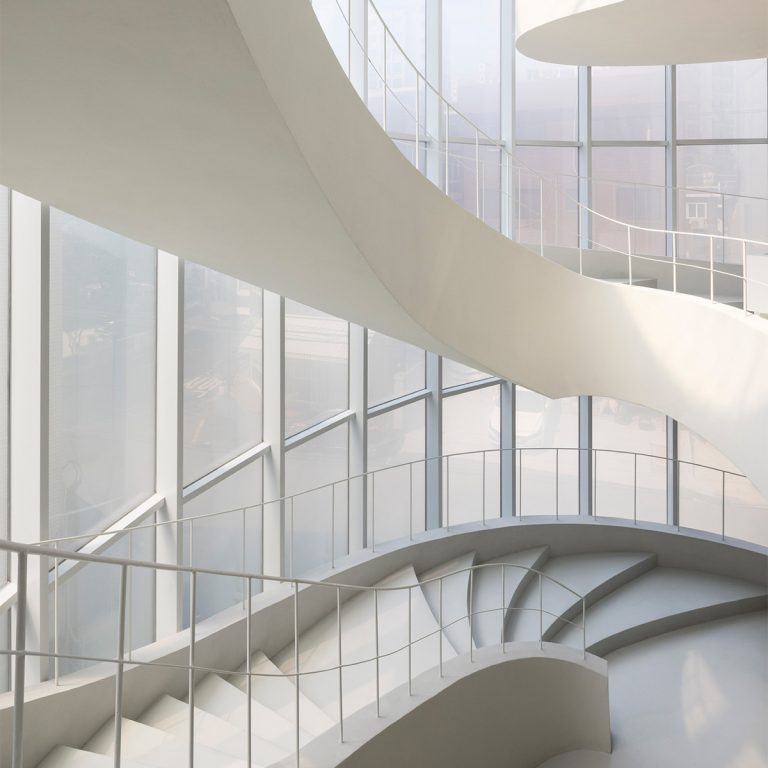
• Marmorino for the walls and ceilings: a plaster technique, here in a vanilla colour, with chips of rosso di Verona stone and which is buffed to a delicate sheen. Over the staircase it is highly polished so as to reflect the spiral upwards as if to the top of the building.
• Terrazzo for the floors, is polished inside the store and rough outside, where small Italian pebbles surprisingly abutt the French trottoir.
Like a walk through the fog of Reggio Emilia, the landscape of the store unfolds and as clothes come into focus you feel a sense of discovery. Lighting is reflected off the vanilla coloured marmorino ceilings in order to wash the spaces with a soft general light, and this is boosted with directional lights to enliven the clothes on display.
An illuminated linen screen, whose intriguing, subtle changes backlight a focal mannequin, in fact shows the real-time atmospheric conditions at MaxMara’s home in Italy. The wind, fog, sun and rain are transposed on photographs of the original MaxMara factory building, now the Collezione Maramotti museum and the surrounding Italian landscape. The abstract results appear on these atmospheric projectors in the store: a gentle memory of home.
On the upper floor, an enfilade of windows accentuates the length of the single space and floods it with natural light. Customers arrive upstairs facing a view of the Eiffel Tower, and then are attracted along the room, passing cashmere and camel and silk and cottons, drawn by the atmospheric projector towards its changing patterns of light.
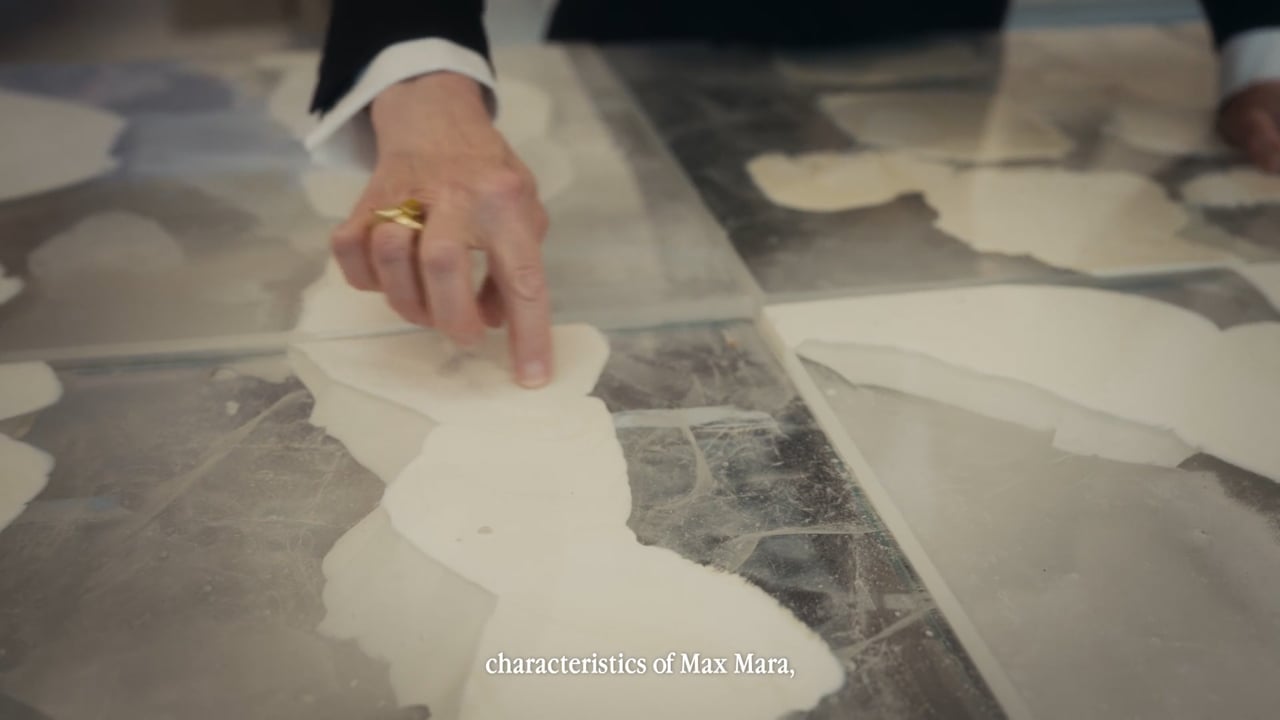
The furniture is sometimes simple and functional and sometimes artisanal and rich. I have made a table that combines these two characteristics by hand casting glass panels infused with creamy clouds, that are laid onto a bright copper rational frame that evokes the structural beams of the original MaxMara factory.
The garden surrounding the store will invigorate MaxMara’s setting in Avenue Montaigne.
It has been designed to combine geometric rationality with expressive excess. Hornbeam clipped into cubes will herald the seasons: refreshing green in spring drying to camel in winter, and a field of willow tree tops will turn in winter to a fiery orange.