PAUL SMITH

New Concept & Stores

1998-2002

PAUL SMITH WESTBOURNE HOUSE, LONDON

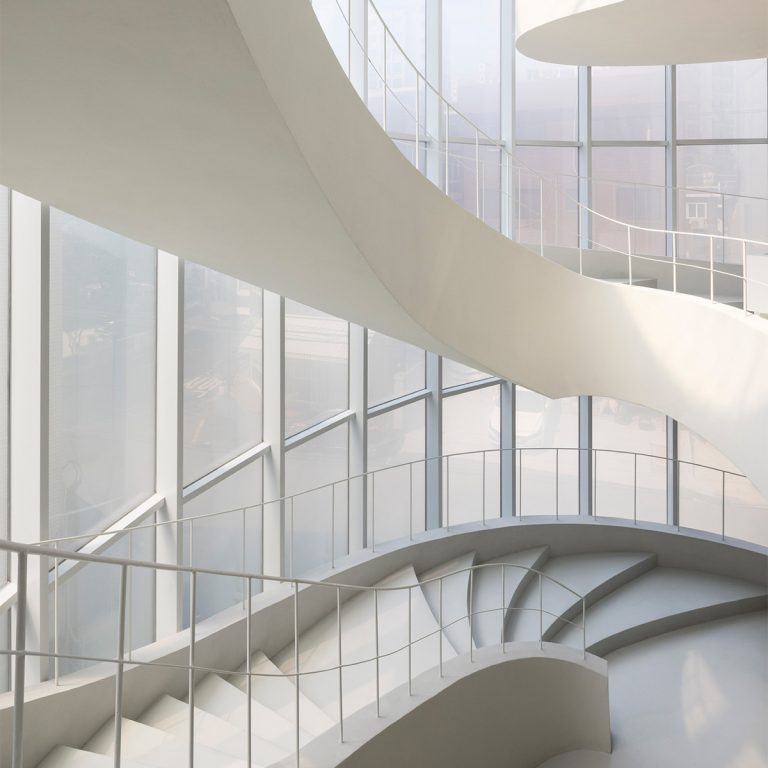
Paul Smith’s first flagship store, Westbourne House realised his dream to have a shop in the informal setting of a house. This grand Kensington townhouse was transformed from a near wreck, which necessitated substantial rebuilding using a steel frame to pin back the facades. The previously chaotic internal arrangement was simplified, and a toplit central stair constructed in glass allows natural light into the heart of the house. There are 2 rooms (shop departments) at each floor. The Dining Room (accessories), The Playroom (children’s wear) and so on. The clothes are displayed in furniture which was designed to loosely evoke furniture that you might find in a house. Dresses in wardrobes, jewellery in a glass topped dining table, display cabinets in picture frames.

We were involved in all areas of the design from the building foundations to the doorhandles and advised on packaging and display.

Designed and constructed in 1998, it is an enduring store which has always remained welcoming and joyful, in the spirit of Paul Smith. Through the years it has given space to its own family stories – among which that of Edie Campbell, now a successful model in her own right, who can be seen here in the pictures of the Westbourne House Playroom happily riding around on a tricycle, age 8.

Westbourne House has been featured in magazines worldwide, with over a hundred pages of publicity, and received 2 architectural awards.

As a result of the success of this store, we were asked to design a store for Paul Smith in Milan.

Project featured in the following books:

  • “Fashion Retail” Published UK 2004 Wiley-Academy.
  • “The Inspired Retail Space” Published USA 2003, Rockport Publishers.
  • Shops and Boutiques 2000. Published PBC International through St Martins Press, New York.
  • New Retail, Rasshied Din, Published Conran Octopus 2000, London.

PAUL SMITH FLAGSHIP, MILAN

We decided with Paul Smith that each flagship store should have a distinct character reflecting the city in which it is situated. This would give us the freedom to vary and develop the architecture within the Paul Smith idiom. So long as sites can be found that are typical of their city, mixing the character of the place with Paul’s wide-reaching and eccentric ideas should give the flagship stores individuality. 

In London, Westbourne House is in a grand stucco townhouse in a smart but bohemian residential district. In Milan, Paul Smith at the Palazzo Gallarati Scotti is set within a vast 18th century palace facing onto the noisy streets of Milan.

The store is in double-height rooms and galleries around a former cloistered courtyard. There are intimate spaces as well as dramatic views from the upper level. The idiosyncrasies of the old building are accentuated, original details are restored and new architectural elements fit loosely within this space. New walls are built as illuminated glass panels to contrast with the old walls which have been re-plastered in the traditional italian way with an extra measure of pink in the mix for vibrancy.

The original worn and cracked terrazzo floor was kept and junctions with new, brighter pink terrazzo are delineated using mosaic. A new terrazzo stair is suspended from a hanging glass panel. Display cabinets are simple glass boxes held in steel straps. Antique furniture was bought for its decrepit beauty and transformed by juxtaposition with unexpected materials and inserts of glass. 

All elements from the architecture to the furniture and fittings were designed or sourced by Sophie Hicks Architects.

Project featured on:

Domus >

Books

  • Custom Made, 2006
    Absolutely Fabulous, Prestel Verlag Publishers, 2006
  • Flagship Stores, Loft Publishers, 2008

PAUL SMITH ‘RED EAR’, TOKYO

A shop for Red Ear Jeans, Paul Smith’s line inspired by classic workwear.
In Japan where shopping is a serious occupation and the consumer is acutely aware of trends, we conceived a shop in which to sell jeans which stylistically we believe had never been seen before. Taking the ‘jean’ as a classic item of clothing, we looked back to its roots and made a store in the style of a hunting lodge. The then relatively unknown British artist Richard Woods produced the artwork representing woodplanks which covers the walls, floors and ceiling. We made a collection of genuine hunting trophies, shipped them to Tokyo, transformed the packing cases into furniture, and hung the jeans on the animal horns.

The shop opened in 2001 but has since been demolished, true to the spirit of constant urban change in Japan.

Project commissioned by Joi’x Corporation and Paul Smith Ltd.

Project featured on the book:

  • The Inspired Retail Space, Rockport Publishers, 2003

Photographs by Edina Van der Wyck (1 – 9), Lee Funnell (10, 15, 17 and 18) and Phil Sayer

RETAIL

ALAÏA

Mercer Street, West Village, New York, USA